
Violence Versus Restraint
Stolen WanderSeveral confrontations test whether characters will repeat violence or interrupt its consequences.
increasing Bearing strength in each event
 decreasing
Bearing strength in each eventdecreasingBill’s Threatening Welcome
Bill’s Threatening Welcome
Verbal escalation
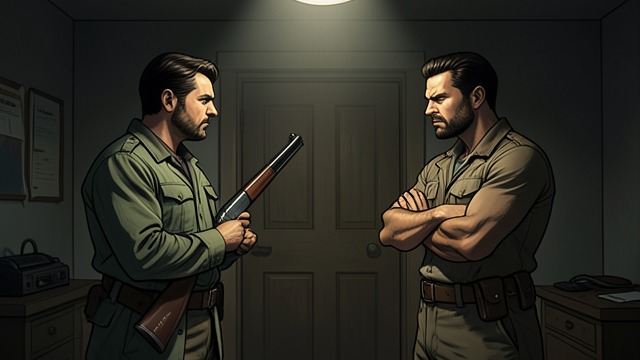
Bill answers Rex’s buzzer with threats, invokes police friends, and challenges him to come upstairs. His hostility grows from the assumption that the two men must confront each other as enemies.
A weapon appears
Inside, Bill points a shotgun at Rex and calls it an upgrade after Nancy took his pistol. Rex raises his hands but continues speaking.
The encounter offers Rex a chance to repeat the forceful approach he used before. The gun makes restraint necessary rather than merely courteous.
Rex’s Restraint
Rex’s Restraint
Refusing retaliation
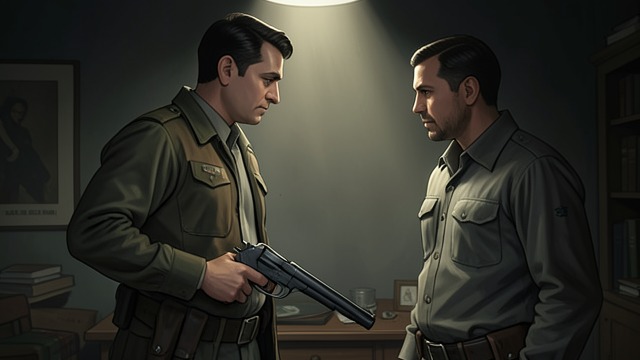
Rex steps close to the shotgun and challenges Bill’s ability to shoot him while sober. He argues that killing him would make Bill unable to face Nancy.
A weapon lowered
Bill gradually lowers the gun. Rex stays focused on finding Nancy rather than punishing Bill for his threats.
The scene contrasts physical courage with measured restraint. Rex accepts danger but chooses words because violence would damage the very relationship he is trying to reach.
Michaels Loses the Fight
Michaels Loses the Fight
Strength asserted
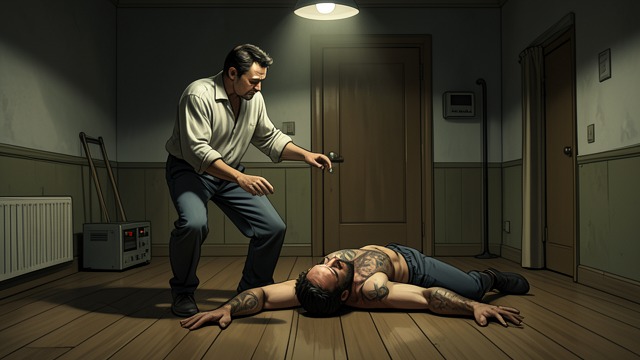
Rex dodges Michaels’s wild attacks and lands a series of blows, eventually putting him on the floor. The physical contest favors Rex decisively.
An offered limit
Rex tells Michaels he can surrender and end the matter. Michaels’s refusal makes clear that the fight is now about pride and authority, not self-defense.
Rex’s ability to dominate the exchange does not settle the conflict. The choice to stop matters as much as the ability to win, and Michaels will not accept it.
The Second Threat
The Second Threat
Rules abandoned
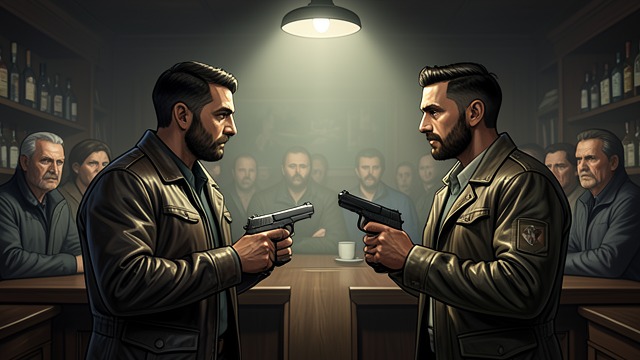
Michaels draws a concealed handgun after losing the fight. His action breaks the agreement and threatens Rex at point-blank range.
Violence multiplied
Both groups draw weapons in response. The danger now exceeds the two men and threatens everyone in the bar.
The sequence shows how humiliation can turn controlled violence into an uncontrolled crisis. Rex’s earlier offer of surrender remains available, but Michaels chooses escalation instead.
A Blow After Peace
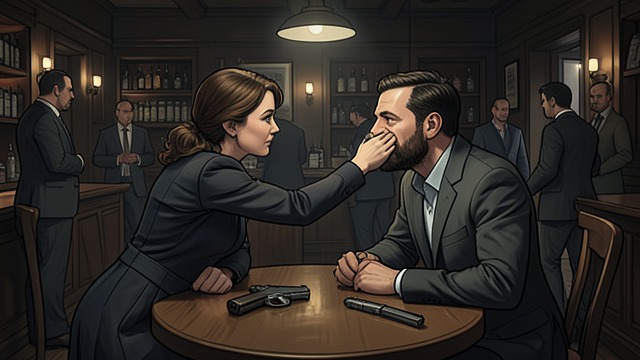
A Blow After Peace
Anger still present
After Michaels declares the feud over, Nancy slaps him across the face and warns him never to point a gun at Rex again. The danger has passed, but her anger has not.
An ending without revenge
Michaels leaves instead of retaliating, and the club does not pursue him. The encounter stops short of another exchange of blows or bullets.
Nancy’s action remains forceful, but the scene moves toward separation rather than continued battle. The characters leave the bar with the immediate cycle of violence interrupted.
When Rex arrives at Bill’s apartment
During the conversation beside Bill’s couch
During the fight at The Mermaid
After Michaels refuses to surrender
Immediately after Michaels lowers his gun
